Summer Heat Safety for Older Cats
Senior cats handle heat poorly, especially with kidney or heart disease. Learn heatstroke signs, cooling strategies, and hydration tips to keep older cats safe.
Cats are desert animals at heart and generally tolerate warmth better than cold, which leads many owners to assume summer is the easy season. For a senior cat, that assumption can be dangerous. Older cats regulate temperature poorly, often carry kidney, heart, or thyroid disease that heat makes worse, and may not have the mobility to move to a cooler spot when they need to. The same cat who lounged happily through summers as a youngster can be genuinely at risk by her teens.
Heat stress and dehydration are the two big summer threats, and both move faster in an aging body. With a cool environment, steady hydration, and a careful eye for early warning signs, you can carry your senior cat comfortably through the hottest months.
Summer Cooling Essentials for Senior Cats

$29.99 on Amazon
Pressure-activated cooling surface that draws heat away on hot afternoons
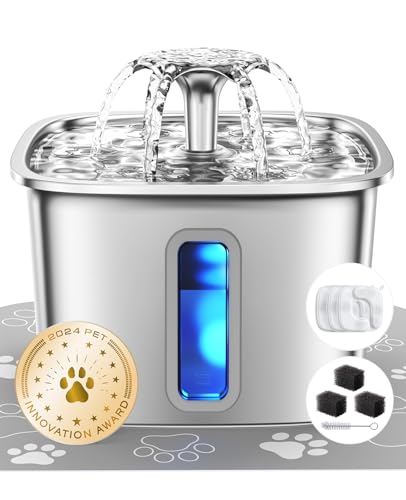
Veken Stainless Steel Water Fountain
$25.49 on Amazon
Moving water tempts reluctant senior drinkers and supports aging kidneys
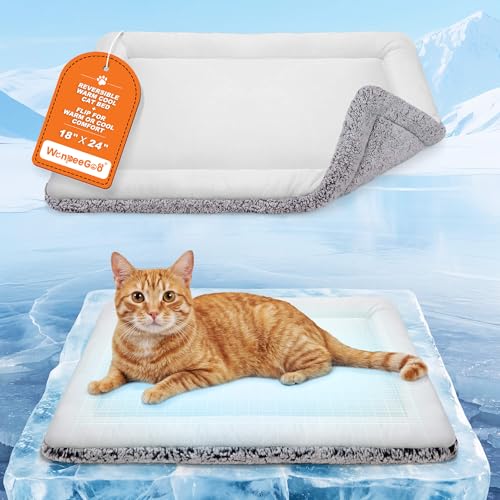
WanpeeGoo Reversible Cooling Cat Bed
$16.99 on Amazon
Cool side for summer and warm side for winter, washable and non-slip
Why Heat Is Riskier for Aging Cats
A young cat handles a warm house with ease, panting briefly or stretching out on cool tile. Several age-related changes erode that resilience.
Less efficient temperature control
Cats cool themselves mainly by grooming, which evaporates saliva from the coat, and by panting in extreme heat. Senior cats often groom less because of arthritis or dental pain, and their circulation and heat regulation are less responsive overall. Heat builds up in their bodies more readily and clears more slowly.
Chronic disease raises the stakes
Most cats over ten carry some chronic condition. Kidney disease impairs water conservation, so heat-driven fluid loss leads to dehydration faster. Heart disease and hyperthyroidism both strain a cat whose body is working hard to shed heat. For these cats, a hot afternoon is not just uncomfortable, it is a medical risk.
Haven Pet Insurance for Senior Cats.Coverage for accidents, illness, and the chronic conditions that drive the biggest senior-cat vet bills (kidney disease, hyperthyroidism, diabetes). Get a fast, free quote using your cat’s breed, age, and zip, then see your monthly premium before you commit.Sponsored
Mobility limits escape routes
A cat with arthritis may not bother to walk to the cool basement or the tiled bathroom when she gets too warm. Keep cool resting spots close to where your senior already spends her time, so comfort never depends on a long, painful trip.
Keep the Environment Cool
Your most important job is controlling the spaces your cat lives in:
- Use air conditioning or fans to hold indoor temperatures in a safe range, ideally below the mid 80s for a senior.
- Close blinds and curtains on sun-facing windows during the day to block radiant heat.
- Offer cool surfaces: bare tile, a cooling mat in the shade, or a damp towel she can choose to lie on.
- Keep beds out of direct sun, and remove heated beds or thick blankets until fall.
- Provide a cool, ventilated hideaway away from greenhouse-like sunrooms and stuffy closed rooms.
Help Your Cat Beat the Heat
- Pet Cooling Mats - A cool surface for hot afternoons, no electricity needed
- Cat Water Fountains - Encourage reluctant seniors to drink more in summer
- Reversible Cooling Beds - Comfortable resting spots that stay cool in heat
Prioritize Hydration
Summer dehydration is the quiet danger for senior cats, and it compounds kidney problems. Make drinking and water-rich food irresistible:
- Run a water fountain, since most cats prefer moving water and will drink more from it.
- Feed plenty of wet food, which is mostly water, and add a splash of warm water or low-sodium broth.
- Set up several water stations around the house, including the cool rooms where your cat rests.
- Drop a few ice cubes in bowls on hot days, which both cools and intrigues curious cats.
- Check hydration by gently lifting the skin at the scruff; if it is slow to settle back, call your vet.
Recognize Heatstroke Early
Heatstroke is a true emergency, and seniors with heart or kidney disease can deteriorate within minutes. Learn the progression:
- Early: panting or open-mouth breathing, drooling, restlessness, seeking cool floors.
- Worsening: bright red or muddy gums, vomiting or diarrhea, weakness, stumbling, fast heartbeat.
- Critical: collapse, seizures, unresponsiveness.
If you suspect heatstroke, move your cat to a cool place at once, offer water but do not force it, wet her fur with cool (never ice-cold) water, and head to an emergency vet immediately. Heat damage to the kidneys and other organs can continue even after she seems to recover, so a senior always needs to be examined.
Grooming and Coat Care in Summer
Resist the urge to shave a long-haired senior. The coat insulates against heat and shields skin from sunburn, and shaving can backfire. Instead, brush regularly to thin the dense undercoat and remove the loose hair that traps warmth. Frequent grooming also cuts down on the hairballs that increase when a stressed or overheated cat over-grooms. If your cat is matted or can no longer groom herself well, ask a professional about a safe sanitary trim rather than shaving at home.
Summer Safety Checklist
- Keep used rooms cool, ideally below the mid 80s, with AC or fans.
- Block direct sun with blinds and offer cool tile or a cooling mat.
- Run a water fountain and feed extra wet food for hydration.
- Set up multiple water stations near your cat's resting spots.
- Never leave a senior cat in a hot car, sunroom, or unventilated space.
- Brush regularly instead of shaving the coat.
- Learn heatstroke signs and keep your emergency vet's number handy.
- Be extra vigilant with cats who have kidney, heart, or thyroid disease.
This guide is educational and does not replace veterinary care. If your senior cat shows any signs of heat stress or dehydration, contact your veterinarian right away.
Senior Cat Wellness & Care Planner
Track your aging cat's health, meds, vet visits, mobility, nutrition, and quality of life — all in one printable planner.
Frequently Asked Questions
Are senior cats more sensitive to heat than younger cats?
Yes. Older cats regulate body temperature less efficiently, are more likely to have heart, kidney, or thyroid disease that heat stress aggravates, and may not move to a cooler spot as readily if arthritis makes walking hard. Overweight seniors and flat-faced breeds like Persians struggle even more. A cat that handled summer fine at age four can become genuinely vulnerable to heat by age twelve, so do not assume past summers predict this one.
What temperature is too hot for an older cat?
Cats are comfortable up to around 80°F, but seniors start to struggle as indoor temperatures climb above the mid 80s, and anything over 90°F is risky for a frail or sick older cat. Humidity makes it worse because cats cool themselves mainly by panting and grooming, both of which work poorly in damp air. Keep a senior cat in air conditioning or a cooled room during heat waves rather than relying on her to cope.
How do I know if my cat has heatstroke?
Early signs include panting or open-mouth breathing, drooling, restlessness, and seeking cool surfaces. As it worsens you may see bright red gums, vomiting, weakness, stumbling, rapid heartbeat, and collapse. Heatstroke is a life-threatening emergency, especially in a senior with heart or kidney disease. Move your cat to a cool place, offer water, dampen her with cool (not ice-cold) water, and get to a veterinarian immediately.
Why does dehydration hit senior cats so hard in summer?
Many older cats have early kidney disease, which already reduces their ability to conserve water, so summer fluid loss tips them into dehydration faster. Cats also have a naturally weak thirst drive and may not drink enough to keep up. Dehydration strains the kidneys and heart and can trigger a crisis. Combat it with a water fountain, plenty of wet food, multiple water stations, and even a few ice cubes in the bowl.
Do cooling mats actually help cats stay comfortable?
Pressure-activated gel or self-cooling mats give a cat a cool surface to lie on, drawing heat away from the body without electricity or refrigeration. Many senior cats appreciate them in a shaded spot during hot afternoons, though some take time to accept a new surface. They are a useful supplement to air conditioning and shade, not a replacement for them. Always give your cat the choice to move on and off the mat freely.
Can I leave my senior cat home alone during a heat wave?
Only if you can guarantee a safe temperature. Set air conditioning to a steady level, close blinds against direct sun, leave several bowls of fresh water plus a fountain, and provide cool tile or a cooling mat in the shade. Never leave a senior cat in a room that can overheat, and never in a parked car or sunporch. If your power is unreliable in summer, arrange a check-in or a cooler place for her to stay.
Should I shave my long-haired senior cat in summer?
Usually not. A cat's coat insulates against heat as well as cold and protects skin from sunburn, so shaving rarely helps and can cause problems. Instead, brush your senior regularly to remove the dense undercoat and loose hair that trap warmth, which also reduces hairballs. If your cat is matted, elderly, or has trouble grooming herself, ask a groomer or vet about a sanitary or lion trim done safely rather than shaving at home.
Need more help with your aging cat?
Browse our guides by topic to find practical solutions.
Wellness Planner — $39