Best Slow Feeder Bowls for Cats (2026 Picks)
The best slow feeder bowls for cats in 2026, designed to stop fast eating and vomiting. Gentle silicone and ceramic picks compared, with senior-friendly buying tips.
If your cat inhales its meal in seconds and then brings it right back up, a slow feeder bowl is often the simplest fix. These bowls use ridges, mazes, or nubs to make a cat work food out gradually instead of gulping it down, which paces eating, aids digestion, and frequently stops the fast-eating vomit owners know as scarf and barf. For an older cat, a gentle slow feeder can do all of that while adding a little harmless mealtime enrichment.
Below are our research-based slow feeder picks, chosen from difficulty level, material, ease of cleaning, and verified owner reviews. We favored gentle, shallow designs in silicone or ceramic, since an aging cat needs a modest slowdown, not a frustrating puzzle.
Best Slow Feeder Bowls for Cats

Y YHY Y YHY Ceramic Slow Feeder Bowl
$14.13 on Amazon
Tilted ceramic slow feeder that paces eating and spares the chin

S&Q's Ceramics S&Q's Ceramics Raised Slow Feeder
$15.19 on Amazon
Elevated, tilted ceramic slow feeder for dry and wet food

Bifeaw Bifeaw Silicone Slow Feeder Bowl
$7.99 on Amazon
Easy-clean silicone slow feeder for both dry and wet food
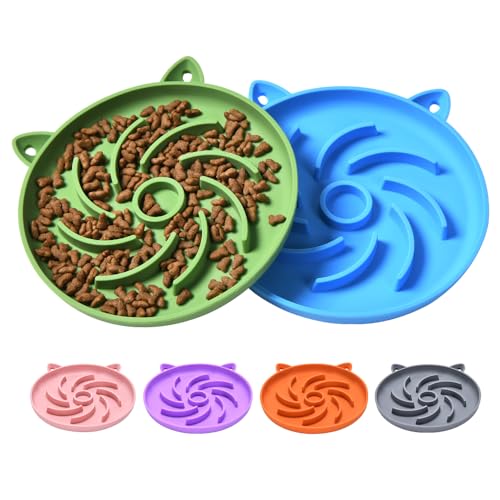
Sarnxgr Sarnxgr Silicone Slow Feeder 2-Pack
$5.99 on Amazon
Gentle silicone puzzle bowls in a value two-pack
Soft-prong slow feeder that gently spreads out a meal
How We Chose These Slow Feeders
We did not run a feeding trial in a lab. We compared slow feeders on the factors that decide whether one helps a cat without frustrating it: how gentle and learnable the design is, the material and how easy it is to clean, stability so it does not slide, and suitability for wet or dry food. We read patterns across verified owner reviews to surface complaints about overly difficult mazes or hard-to-clean crevices, and we leaned toward shallow, gentle designs that suit older cats.
Why a Slow Feeder Helps
Cats that bolt their food swallow air and overload the stomach in seconds, which can trigger regurgitation minutes later. A slow feeder breaks up that gulping by making the cat nudge food out of grooves a little at a time, so the meal stretches over minutes instead of seconds. For many fast eaters, that single change ends the after-meal vomit. Slower eating may also aid digestion and curb the begging of a cat that finished too quickly. And the mild challenge gives a food-motivated or bored cat gentle enrichment at mealtime.
That said, a slow feeder only helps vomiting that comes from eating too fast. If your cat keeps throwing up despite slower meals, the cause may be hairballs, food sensitivity, nausea, or illness, and that belongs with your vet rather than a bowl.
Senior-Specific Cautions
Older cats benefit from slow feeders too, but with a lighter touch. A senior with dental disease, arthritis in the neck or jaw, or cognitive decline can find an intricate maze frustrating and may simply give up and walk away from the meal. For these cats, choose a gentle, shallow design and watch that your cat still eats a full portion. Some seniors do better with a lick mat, which delivers the same paced-eating benefit with even less difficulty. The goal is a modest slowdown, never a meal so hard the cat skips it.
Material and Cleaning
Silicone and ceramic are the easiest materials to keep clean, which matters because the grooves that slow eating also trap food. Silicone is flexible, gentle, and dishwasher friendly, and works well for both wet and dry food. Ceramic is heavy and stable, resists biofilm, and avoids the chin acne some cats get from plastic, though it can chip if dropped. Whatever you choose, wash it after each meal, since a fussy senior will reject a feeder that smells stale or has crusted food in the channels.
Wet Food and the Lick Mat Overlap
Many slow feeders handle wet food, especially smooth silicone or ceramic designs you can smear pate into. Spreading canned food across the ridges paces a gulper and adds licking enrichment, blurring the line between a slow feeder and a lick mat. Avoid deep, intricate plastic mazes for wet food, which trap residue and are a chore to clean. If your cat eats canned meals, pick a feeder explicitly described as suitable for both wet and dry food, or pair a simple slow feeder with a lick mat.
Slow Feeder Quick Links
- Y YHY Ceramic Slow Feeder Bowl - tilted ceramic, gentle pacing
- Bifeaw Silicone Slow Feeder Bowl - easy-clean value pick
- Browse all cat slow feeder bowls on Amazon
The Bottom Line
A slow feeder bowl is a cheap, effective way to stop a fast-eating cat from gulping and vomiting, while adding light enrichment and aiding digestion. For older cats, keep the design gentle and shallow so the meal stays manageable, choose easy-clean silicone or ceramic, and wash it after every meal. Measure the food you add to keep portions in check, and if vomiting persists despite slower eating, see your vet to rule out a medical cause behind it.
Related Guides
- Best Lick Mats for Senior Cats - Gentle slow-eating enrichment.
- Best Elevated Bowls for Senior Cats - Easing posture and vomiting.
- Best Automatic Feeders for Senior Cats - Measured meals on a schedule.
Senior Cat Wellness & Care Planner
Track your aging cat's health, meds, vet visits, mobility, nutrition, and quality of life — all in one printable planner.
Frequently Asked Questions
What is a slow feeder bowl and why use one for a cat?
A slow feeder bowl has raised ridges, mazes, or nubs that force a cat to work food out of the grooves rather than gulp it from an open dish. This slows eating, which helps cats that scarf their food and then vomit it back up, a common problem sometimes called scarf and barf. Slower eating can also aid digestion, add light mental enrichment, and give a bored or food-motivated cat something to engage with at mealtime instead of bolting the bowl in seconds.
Do slow feeders really stop cats from throwing up after eating?
For cats that vomit because they eat too fast, often yes. Gulping lets a cat swallow air and overfill the stomach quickly, which can trigger regurgitation soon after the meal. Spreading the same food across a slow feeder paces the eating and frequently reduces or stops that fast-eating vomit. It will not help vomiting caused by illness, hairballs, food sensitivity, or nausea, though. If your cat keeps vomiting despite slower eating, have your vet rule out a medical cause.
Are slow feeder bowls good for senior cats specifically?
They can be, with a couple of caveats. Many older cats benefit from slower eating and the gentle enrichment, especially if they gulp and vomit. But a senior with dental disease, arthritis, or cognitive decline may find a tricky maze frustrating, so choose a gentle, shallow design rather than a complex puzzle. Watch that your cat still eats enough and does not give up. For a senior, the goal is to slow eating modestly, not to make the meal a difficult chore.
Can I use a slow feeder for wet food?
Yes, many slow feeders work for wet food, especially silicone or smooth ceramic designs that you can smear pate into and clean easily. Spreading wet food across the ridges paces a gulping cat and adds licking enrichment, similar to a lick mat. Avoid deep, intricate plastic mazes for wet food, since they trap residue and are hard to clean. Pick a slow feeder described as suitable for both wet and dry food if your cat eats canned meals.
How do I clean a slow feeder bowl?
Clean it after each meal, since the same grooves that slow eating also trap food and grow bacteria. Wash with warm soapy water and a brush to reach into the channels, or use the dishwasher if the design allows. Silicone and ceramic are generally easier to clean thoroughly than complex plastic. A slow feeder that smells or has crusted food will put a fussy senior off, so easy cleaning is a feature worth prioritizing when you choose one.
Will a slow feeder help an overweight cat lose weight?
Indirectly. A slow feeder does not reduce calories, so it will not cause weight loss on its own, but by stretching out a meal it can make a cat feel more satisfied and reduce begging between meals. Combined with proper portion control and a vet-guided diet, that can support a weight-loss plan. Measure the food you put in the feeder and keep it within the daily target. The slow feeder is a behavior tool, not a substitute for feeding the right amount.
What if my cat gives up on the slow feeder and walks away?
Some cats, especially seniors or those new to the idea, get frustrated by a difficult design and abandon the meal. Start with an easy, shallow feeder and let your cat learn it during a meal it enjoys. If your cat still struggles or eats noticeably less, switch to a gentler model or a lick mat, which offers the same slow-eating benefit with less challenge. The aim is a modest slowdown, not a puzzle so hard your cat skips eating.
Need more help with your aging cat?
Browse our guides by topic to find practical solutions.
Wellness Planner — $39