Best Food for Senior Cats with Kidney Disease
Renal diets for senior cats with kidney disease, compared on phosphorus, protein, and moisture. Vet-informed picks plus how to get a CKD cat to eat. Educational only.
Chronic kidney disease, or CKD, is one of the most common diagnoses in older cats, and diet is the most powerful tool owners have to manage it at home. The right food can slow the disease, ease nausea, and add quality years. The wrong approach, or a food your cat refuses, can do real harm. This guide explains how renal diets work and reviews the leading options, but it is educational only and does not replace your veterinarian's staging and plan.
One thing worth saying up front: the goal is a kidney-appropriate diet your cat will actually eat. A perfectly formulated renal food sitting untouched in the bowl helps no one, because a cat with kidney disease cannot afford to skip meals.
Renal Diets and Low-Phosphorus Options

Hill's Prescription Diet Hill's k/d Kidney Care Wet Stew
$64.99 on Amazon
Renal-formulated wet food with low phosphorus and high moisture

Royal Canin Royal Canin Renal Support E Loaf
$22.79 on Amazon
Palatable loaf in sauce for cats who prefer a smoother texture
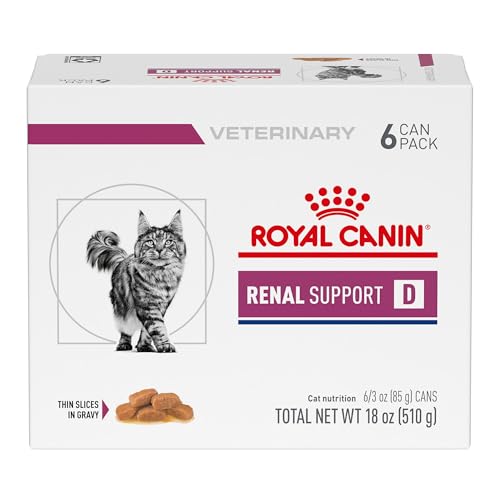
Royal Canin Royal Canin Renal Support D Slices
$19.29 on Amazon
Thin slices in gravy, useful for rotating textures with picky cats

Hill's Prescription Diet Hill's k/d Kidney Care Dry
$43.99 on Amazon
Dry renal option for cats who refuse wet food entirely

Weruva Weruva Wx Phos Focused Pate
$25.49 on Amazon
Low-phosphorus non-prescription pate for early disease or picky cats
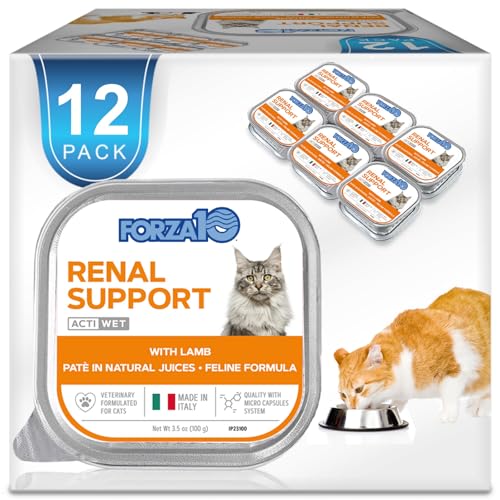
$29.99 on Amazon
Vet-formulated renal wet food with a lamb flavor for variety
How We Chose These Foods
We did not run a clinical trial. We reviewed the formulation of each diet, including phosphorus and protein levels and the presence of omega-3s, alongside the published positioning of the major therapeutic renal lines from Hill's, Royal Canin, and Purina, plus a respected low-phosphorus non-prescription option. We weighed texture variety, since kidney cats are notoriously picky, and patterns in verified owner reviews. Prescription diets require veterinary authorization to purchase, which is by design.
What a Renal Diet Actually Does
Therapeutic kidney diets differ from regular cat food in several deliberate ways. They restrict phosphorus, which is the single most important change, because lowering blood phosphorus is consistently linked to slower disease progression and longer survival. They provide reduced but high-quality protein, so the kidneys process less nitrogen waste while the cat still keeps muscle. They control sodium, add omega-3 fatty acids that support kidney blood flow, and often boost potassium and B vitamins that CKD cats lose through dilute urine.
Veterinary studies have shown that cats fed a therapeutic renal diet live significantly longer than those kept on maintenance food, which is why these diets are a cornerstone of CKD care from IRIS stage 2 onward.
Why Phosphorus Matters More Than Protein
For years the headline of kidney nutrition was low protein. The science has shifted. We now understand that phosphorus control does the heavy lifting. Excess phosphorus accelerates kidney damage and triggers the hormonal and bone changes of advanced disease. Renal diets restrict protein in part because high-protein ingredients are also high in phosphorus, but the protein that remains is carefully chosen to be highly digestible so an older cat does not waste away. If diet alone cannot bring phosphorus down, your vet may add a phosphate binder to meals.
Moisture Is Non-Negotiable
Healthy kidneys concentrate urine to conserve water. Diseased kidneys cannot, so a CKD cat dumps water into dilute urine and walks a constant line toward dehydration. This makes moisture central to management. Wet renal diets are strongly preferred over dry, and many owners add extra water to the food, run a cat water fountain, and in advanced cases give subcutaneous fluids at home as directed by their vet. Keeping a kidney cat hydrated reduces nausea and helps them feel better day to day.
Haven Pet Insurance for Senior Cats.Coverage for accidents, illness, and the chronic conditions that drive the biggest senior-cat vet bills (kidney disease, hyperthyroidism, diabetes). Get a fast, free quote using your cat’s breed, age, and zip, then see your monthly premium before you commit.Sponsored
The Major Prescription Renal Diets
Hill's Prescription Diet k/d
One of the most widely used and studied feline renal lines, available in stews, pates, and dry. It pairs reduced phosphorus with added omega-3s and antioxidants. Many cats accept the wet stew well, which matters for hydration.
Royal Canin Renal Support
Royal Canin offers multiple renal formulas, marketed with letters such as A, D, E, and T, that differ mainly in flavor and texture. This range exists specifically because kidney cats are fickle. Having loaf, slices in gravy, and several proteins to rotate through is a real practical advantage.
Purina Pro Plan Veterinary NF Kidney Function
Purina's renal line is another vet-authorized option with reduced phosphorus and protein, available in wet and dry. If your cat turns up their nose at Hill's and Royal Canin, NF is worth trying before giving up on a therapeutic diet entirely.
When Over-the-Counter Low-Phosphorus Foods Make Sense
In very early kidney disease, or when a cat flatly refuses every prescription diet, a naturally low-phosphorus over-the-counter food can be a reasonable compromise. Options like Weruva's Wx Phos Focused line are formulated with phosphorus in mind, though they are not tested for CKD the way therapeutic diets are. Use them in partnership with your vet and recheck blood phosphorus to confirm the food is actually helping. A diet your cat eats that lowers phosphorus modestly beats a perfect diet they refuse.
Renal Diet Quick Links
- Hill's k/d Kidney Care Wet Stew (24-pack) - vet-authorized renal wet food
- Weruva Wx Phos Focused Pate - low-phosphorus non-prescription option
- Browse cat kidney care foods on Amazon
Prescription diets require veterinary authorization. Always confirm the right diet and stage with your veterinarian.
Getting a Kidney Cat to Eat
Appetite is the daily battle in CKD, because the disease causes nausea and many renal foods are less palatable than what your cat is used to. Switch slowly over weeks, never during a flare or hospital stay when your cat may form a lasting aversion. Warm wet food to release aroma, offer small frequent meals, and keep two or three accepted flavors in rotation. Ask your vet about anti-nausea medication and appetite support, since controlling nausea often does more for intake than any food trick. Our guide to appetite stimulants and a cat that won't eat goes deeper here.
The Bottom Line
For a senior cat with diagnosed kidney disease, a phosphorus-restricted, moisture-rich renal diet is one of the best things you can do to extend comfortable life. Lean toward wet formulas, rotate textures to keep a picky cat eating, and work closely with your veterinarian on staging, phosphorus monitoring, and appetite. The best renal diet is the kidney-appropriate one your cat will reliably eat.
Related Guides
- Best Prescription Diet for Senior Cats - Rx diets for kidney, thyroid, and diabetic cats.
- Best Water Fountains for Cats - Hydration support that matters most for CKD.
- Senior Cat Not Eating: Appetite Tips - Keeping a kidney cat eating.
Senior Cat Wellness & Care Planner
Track your aging cat's health, meds, vet visits, mobility, nutrition, and quality of life — all in one printable planner.
Frequently Asked Questions
What makes a food appropriate for a cat with kidney disease?
Therapeutic renal diets share a few features: restricted and high-quality protein, much lower phosphorus, controlled sodium, added omega-3 fatty acids, and often potassium and B-vitamin support. Lowering phosphorus is the change most strongly linked to slowing chronic kidney disease and helping cats live longer, which is why phosphorus control, not just protein, is the heart of a renal diet.
Does my cat really need a prescription renal diet?
For cats in IRIS stage 2 and beyond, veterinary renal diets are one of the few interventions proven to extend survival and quality of life, so they are usually worth strong effort. In very early disease your vet may simply increase moisture and monitor. The decision and the staging belong to your veterinarian, since renal diets are not appropriate for healthy cats.
Why is phosphorus the focus instead of protein?
High blood phosphorus damages the kidneys further and drives the bone and hormone problems of advanced disease. Renal diets lower phosphorus first, and they restrict protein partly because protein-rich ingredients are also phosphorus-rich. The protein they do include is high quality so cats keep muscle. Controlling phosphorus, by diet and sometimes binders, is the clearest dietary lever for kidney cats.
My kidney cat won't eat the prescription food. What can I do?
This is common and important, because a kidney cat must keep eating. Try both wet and dry versions, warm the food, offer several brands since Hill's, Royal Canin, and Purina all make renal diets, and transition slowly. A small amount of a low-phosphorus topper can help. If your cat still refuses, a less restricted diet they will eat beats a perfect diet they reject.
Is wet or dry better for a cat with kidney disease?
Wet food is strongly preferred. Cats with kidney disease lose the ability to concentrate urine and need far more water than a healthy cat. Canned renal diets deliver moisture with every meal, easing the workload on failing kidneys and reducing dehydration. If your cat insists on dry, add a water fountain and increase moisture wherever you can, but wet is the better baseline.
Can I feed a low-phosphorus over-the-counter food instead?
Some non-prescription foods are naturally lower in phosphorus and can help in very early disease or when a cat refuses prescription diets, but they are not formulated or tested for kidney disease the way therapeutic diets are. Treat them as a compromise to discuss with your vet, ideally checking blood phosphorus to confirm the diet is actually doing its job.
How quickly should I switch my cat to a renal diet?
Slowly, over two to four weeks, and only when your cat is feeling reasonably well, never during a crisis or hospital stay when they may form a food aversion. Mix in a little of the new diet at a time, warm it, and be patient. Cats associate nausea with whatever they ate at the time, so a calm, gradual switch protects long-term acceptance.
Need more help with your aging cat?
Browse our guides by topic to find practical solutions.
Wellness Planner — $39