Best Bone Broth for Cats (2026 Picks)
The best bone broths for cats in 2026, compared for safety, sodium, and palatability. Cat-safe pour-over and lickable picks that boost hydration and tempt senior appetites.
A good bone broth is one of the easiest ways to add moisture and appeal to an older cat's bowl. It is mostly water with a savory, meaty aroma, which makes it a natural fit for cats that drink too little or have lost interest in food. The trick is choosing one that is genuinely safe for cats, since many human broths contain ingredients that are toxic to them.
Below are our research-based bone broth picks, chosen from ingredient safety, sodium level, palatability, and verified owner reviews. We favored cat-formulated broths with clean ingredient lists and no onion or garlic, plus convenient pour-over and lickable formats that make daily use simple.
Best Bone Broth for Cats
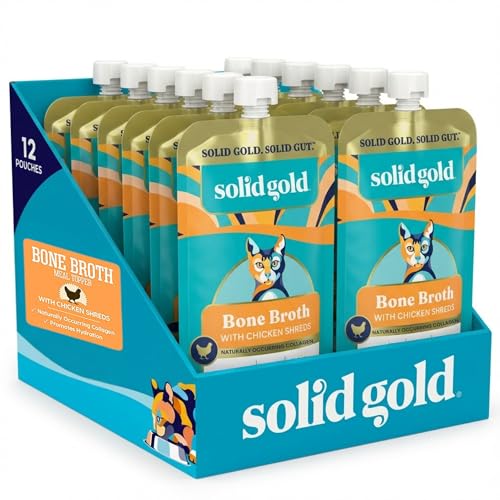
Solid Gold Solid Gold Bone Broth Chicken Topper
$21.97 on Amazon
Lickable chicken broth with collagen for hydration and gut support

Instinct Instinct Bone Broth Cage-Free Chicken
$6.99 on Amazon
Human-grade pour-over broth to add moisture at meals

Caru Caru Daily Dish Beef Bone Broth
$5.01 on Amazon
Human-grade pour-over broth for wet or dry food

Solid Gold Solid Gold Bone Broth Salmon Topper
$21.97 on Amazon
Salmon broth pouches with collagen for picky senior cats
Low-sodium pourable broth with glucosamine and chondroitin
How We Chose These Broths
We did not run a feeding trial in a lab. We compared broths on the things that decide whether one is safe and useful for a cat: ingredient quality, the absence of toxic additions like onion and garlic, sodium level, and how palatable and convenient each product is to serve. We read patterns across verified owner reviews to surface recurring praise and complaints, and we favored cat-formulated broths with clean labels over anything adapted from human cooking.
Why Bone Broth Earns a Spot
The headline benefit is hydration. Cats have a weak thirst drive, and senior cats in particular tend toward chronic mild dehydration that strains aging kidneys. Pouring broth over food slips water into a cat that would never lap that much from a bowl. The second benefit is appetite: the warm, meaty smell of broth is hard for a senior with a dulled sense of smell to resist, so it can revive a reluctant eater or rescue a meal the cat was about to snub. For the full picture on uses and safety, see our companion guide on bone broth for senior cats.
Safety Comes First
The non-negotiable rule is no onion or garlic, both toxic to cats, which immediately disqualifies most human bone broths and stock cubes. Those products also tend to be very high in sodium, a problem for any cat and especially for one with kidney or heart disease. A cat-safe broth is plain, with a short ingredient list and minimal salt. Sticking to products formulated specifically for cats removes most of this risk, which is why every pick above is made for felines.
Comparing the Picks
| Broth | Format | Best for |
|---|---|---|
| Solid Gold Chicken | Lickable pouch | Hydration and gut support |
| Instinct Chicken | Pour-over pouch | Everyday value topper |
| Caru Beef | Pour-over carton | Variety and flavor rotation |
| Solid Gold Salmon | Lickable pouch | Picky or fish-loving cats |
| Brutus | Pourable broth | Low-sodium with joint extras |
Format: Pour-Over vs Lickable
Pour-over broths are ideal for moistening meals and adding bulk fluid; you simply spoon them over wet or softened dry food. Lickable single-serve pouches and tubes are great for offering broth on its own to tempt a picky senior, or for spreading on a lick mat. Many households keep both: a larger pour-over for daily hydration and a few lickable servings for the days a cat needs extra coaxing to eat. Rotating flavors can also help a finicky older cat stay interested.
Bone Broth Quick Links
- Solid Gold Bone Broth Chicken Topper - lickable, with collagen
- Instinct Bone Broth Cage-Free Chicken - everyday value pour-over
- Browse all cat bone broths on Amazon
The Bottom Line
The best bone broth for your cat is a plain, cat-safe one with no onion or garlic and low sodium, in a format that fits your routine. Use it to boost hydration and tempt appetite as a supplement, not a meal, and keep fresh water and balanced food as the foundation. If your cat has kidney disease or another chronic condition, pick the lowest-sodium option and confirm it with your vet. For most older cats, a good broth is an easy, low-cost upgrade to the daily bowl.
Related Guides
- Bone Broth for Senior Cats - Benefits, safety, and serving tips.
- Best Food Toppers for Picky Senior Cats - More ways to tempt appetite.
- Old Cat Not Drinking Water - Boosting hydration in seniors.
Senior Cat Wellness & Care Planner
Track your aging cat's health, meds, vet visits, mobility, nutrition, and quality of life — all in one printable planner.
Frequently Asked Questions
What should I look for in a bone broth for cats?
Choose a broth made specifically for cats with a short, clean ingredient list and, critically, no onion, garlic, leeks, or chives, which are toxic to cats. Low sodium matters, especially for senior or kidney cats, so favor products that keep salt minimal. Convenience features like pour-over pouches or lickable single-serve tubes make daily use easier, and collagen or added moisture are nice extras. Above all, the broth should be plain, palatable, and free of human-style seasoning.
Which bone broth is best for a senior cat with kidney disease?
Look for the lowest sodium and phosphorus you can find, and confirm with your vet before adding any broth to a CKD diet. The hydration broth adds is helpful for kidney cats, but the mineral content can work against a renal diet if it is too high. Cat-formulated broths are safer than human ones, which are usually salty. There is no single best product for every kidney cat, so match the choice to your cat's bloodwork and your vet's guidance.
Are commercial cat broths better than human bone broth?
For cats, yes, almost always. Human bone broths and stock cubes typically contain onion, garlic, and high sodium, all of which are problems for cats, with onion and garlic being outright toxic. Commercial cat broths are formulated to be safe and palatable for felines, with seasoning and salt controlled appropriately. Unless you make a plain, unseasoned broth at home, a product designed for cats is the safer and more convenient choice.
How do I serve bone broth to my cat?
Pour a spoonful over wet or softened dry food to add moisture and aroma, offer a small dish of warmed broth on its own to tempt a picky eater, or spread it on a lick mat for slow, soothing hydration. You can also freeze it in small portions and thaw as needed, or offer frozen broth licks in warm weather. Start with a tablespoon or two, then adjust to your cat's tolerance and appetite.
How long does cat bone broth last once opened?
Follow the label, but most refrigerated or opened broths keep for only a few days once opened, and single-serve pouches or tubes are meant to be used quickly. Homemade broth spoils even faster, so refrigerate it and use within a few days or freeze in portions. Discard any broth that smells off or has been left out, since a fussy senior will reject spoiled food anyway and bacteria can upset a sensitive older stomach.
Can kittens or younger cats have bone broth too?
Yes, a cat-safe bone broth is fine for cats of all ages as an occasional topper or hydration boost, not just seniors. The same rules apply: keep it plain, avoid onion, garlic, and excess salt, and treat it as a supplement rather than a meal. It can be especially handy for any cat recovering from illness, a cat that drinks too little, or a finicky eater, regardless of age. Balanced food and fresh water still come first.
Is bone broth a treat or a supplement?
Think of it as a functional supplement that doubles as a treat. Its main jobs are adding moisture and tempting appetite, which makes it genuinely useful rather than just indulgent, but it should still count toward the day's calories and never replace balanced meals or fresh water. Used in modest amounts on top of a proper diet, it earns its place. For cats with health conditions, run the choice and the amount past your veterinarian first.
Need more help with your aging cat?
Browse our guides by topic to find practical solutions.
Wellness Planner — $39