Pet Ramp vs Stairs for Senior Cats
Pet ramp vs stairs for senior cats reaching the bed or couch: how each affects arthritic joints, jump impact, traction, and which suits your older cat.
One of the earliest signs of arthritis in an older cat is a quiet retreat from the high places it used to love. The cat that once sailed onto the bed or the window perch now hesitates, paces below, or stops going up at all. Jumping has started to hurt, and the impact of landing is just as hard on worn joints. Two simple aids bring those spots back within reach: a ramp or a set of stairs.
Both reduce the jarring jump-and-land cycle that aggravates feline arthritis, but they suit different cats. This guide compares ramps and stairs for senior cats by joint impact, footing, space, and ease of training, then helps you match the right aid to your cat.
Mobility Aids for Senior Cats

Pawaboo Foldable Pet Ramp for Bed & Couch
$50.69 on Amazon
Continuous low-impact slope, adjustable height, non-slip surface

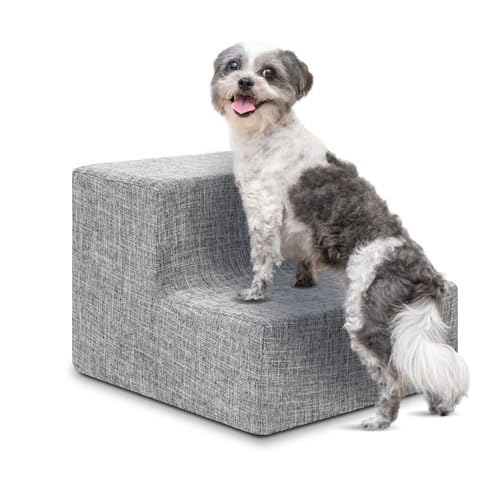
Best Pet Supplies Foam Pet Steps for Cats
$22.66 on Amazon
Soft, lightweight foam steps that are easy on landing joints
Quick Verdict
A ramp is the gentler choice for cats with significant arthritis, hip or knee pain, or hind-leg weakness, because one continuous slope avoids lifting onto individual steps. Stairs save floor space and feel natural to seniors that still step well but can no longer make a single big jump. Our recommendation: pick a ramp for the most painful or wobbly cats and tall destinations like a high bed, and stairs for moderate heights where your cat steps confidently. Whichever you choose, prioritize a gentle angle, a stable base, and a non-slip surface.
The Practical Answer
Watch how your cat moves. If it can still place its paws on steps cleanly, stairs work and take less room. If it drags its back legs, wobbles, or has advanced arthritis, choose a ramp so it can simply walk up a slope. Either way, the goal is the same: end the painful jump down that hammers aging joints.
How a Ramp Helps
A ramp is a single inclined surface the cat walks up and down, with no separate steps to negotiate. That continuous slope spreads the effort evenly and removes the up-onto-each-step motion that stresses sore joints. The gentler the angle and the better the traction, the easier it is for a stiff or weak senior.
Best For
- Significant arthritis in hips, knees, or shoulders
- Hind-leg weakness or wobbliness that makes stepping hard
- Tall destinations like a high bed, where a gentle slope helps most
- Cats recovering from surgery that need low-impact movement
Trade-Offs
- Needs more floor length to keep the angle gentle
- Can look bulky in small rooms
- Some cats prefer steps and need coaxing onto a slope
How Stairs Help
Stairs break the climb into short, manageable rises so a cat never has to make one large jump. Each step is small enough for an older cat to handle, and the unit tucks neatly against furniture. Stairs suit seniors whose jumping has faded but whose footing is still sound.
Best For
- Moderate heights like a couch or a lower bed
- Cats that still step cleanly but cannot make a big leap
- Tight spaces, since steps have a smaller footprint
- Mild to moderate stiffness rather than severe joint disease
Trade-Offs
- Each step still requires lifting a leg, harder for very arthritic cats
- Step height matters, so look for short, shallow rises
- Stability is key, since a wobbly unit scares cats off
Side-by-Side Comparison
| Factor | Ramp | Stairs |
|---|---|---|
| Joint impact | Lowest, continuous slope | Low, but steps require lifting |
| Hind-leg weakness | Best | Harder |
| Floor space | Needs length | Compact |
| Best height | Tall beds and perches | Couch and lower beds |
| Learning curve | Some cats need coaxing | Often intuitive |
| Best for | Severe arthritis, recovery | Mild to moderate stiffness |
Footing and Stability Matter Most
Whatever you choose, a senior cat will only use it if it feels safe. Look for a non-slip surface, carpet, fabric, or textured grip, so paws never skid, and make sure the unit does not wobble, slide, or tip when your cat shifts its weight. Place a soft mat or rug at the bottom for a gentle landing, and keep the aid in the same position so your cat learns the route. A fearful first experience can put a cat off for good, so stability and a gentle angle are worth paying for.
Our Top Pick for Painful Joints
For a cat with real arthritis or back-leg weakness, an adjustable ramp with a gentle slope and a non-slip surface is the kindest way back onto the bed. It removes the jarring jump down entirely and lets your cat walk, rather than lift, to its favorite resting spot.
Check Price on AmazonTraining Your Cat to Use It
Introduce the ramp or stairs patiently. Set it at a destination your cat already wants, like the bed or a sunny perch, and keep the incline gentle. Lure your cat up and down with treats or a wand toy, reward calmly, and let it go at its own pace over several days. Never push or carry a reluctant cat onto it, which only builds fear. Once your cat trusts the path, it will often choose the aid over a painful jump on its own.
Our Recommendation
Match the aid to your cat. Choose a ramp for severe arthritis, hind-leg weakness, post-surgery recovery, or a tall bed, where one gentle slope is easiest. Choose stairs for a senior that still steps well, needs a smaller footprint, or is reaching a moderate height like the couch. In both cases, insist on a non-slip surface, a stable base, and a gentle angle, and pair the aid with the rest of a comfortable setup. If your cat suddenly cannot jump or shows back-leg weakness, see your veterinarian, since it can point to a treatable problem. This article is educational and complements, not replaces, veterinary care.
Senior Cat Wellness & Care Planner
Track your aging cat's health, meds, vet visits, mobility, nutrition, and quality of life — all in one printable planner.
Related Guides
- Old Cat Can't Jump Anymore - Why jumping fades and how to help
- How to Help an Arthritic Cat - Home setup and comfort
- Glucosamine vs Fish Oil for Cats - Joint supplement support
Frequently Asked Questions
Is a ramp or stairs better for a senior cat?
It depends on your cat's specific limitations. A ramp offers one continuous, low-impact slope with no individual steps to climb, which suits cats with significant arthritis, hip or knee pain, or weakness in the back legs. Stairs take up less floor space and feel natural to cats that still step well but can no longer make a big single jump. For the most painful or wobbly seniors, a gently angled ramp is usually the gentler choice.
Why does jumping hurt arthritic cats so much?
Jumping up loads the joints on takeoff, and jumping down sends a hard impact through the wrists, elbows, shoulders, hips, and knees on landing. In an arthritic cat, those joints already have worn cartilage and inflammation, so each leap aggravates the pain and the damage. Many older cats quietly stop jumping to favorite perches or the bed long before owners notice. A ramp or stairs lets them keep reaching those spots without the jarring impact.
How do I get my cat to use a ramp or stairs?
Go slowly and make it rewarding. Place the ramp or steps at a favorite spot like the bed or a window perch, keep the incline gentle, and ensure the surface is non-slip so your cat feels secure. Lure your cat up and down with treats or a wand toy, praise calmly, and never force or rush it. Some cats take a few days to trust the new path. A stable, wobble-free unit at the right height builds confidence fastest.
What angle or height should a cat ramp be?
Gentler is better for arthritic cats. A shallow incline, ideally under about 25 degrees, is far easier on sore joints than a steep climb, even though a shallow ramp needs more length. Match the top height to the surface your cat wants to reach, whether that is a roughly 18-inch bed or a higher window perch, and choose an adjustable model if your furniture varies. A non-slip surface and side stability matter as much as the angle.
Are ramps or stairs better for a cat with back leg weakness?
A ramp is usually better for back leg weakness or neurological issues, because the cat can walk up a continuous surface without lifting each leg high onto a separate step. Stairs require repeated stepping up, which is harder for a cat that drags or struggles to lift its hind legs. Choose a wide ramp with good traction and low sides for security. For any sudden hind-limb weakness, see your veterinarian, since it can signal a treatable medical problem.
Can I use steps for the bed and a ramp for the couch?
Yes, and mixing is sensible. Match the aid to each location and height. Stairs work well for moderate heights like a couch where your cat still steps confidently, while a longer ramp suits a tall bed or a cat that needs the gentlest possible slope. Keep the surfaces non-slip, place a soft landing spot at the bottom, and keep each aid in the same position so your senior learns the route and uses it reliably.
Need more help with your aging cat?
Browse our guides by topic to find practical solutions.
Wellness Planner — $39