Best Cat Stairs for Beds: Senior Cat Steps 2026
The best cat stairs to help an arthritic senior cat reach the bed without painful jumps. Compare height, materials, and traction across our top carpeted picks.
For most cats, the bed is more than furniture. It is a warm, high, safe place beside the people they love, and giving it up because their joints can no longer manage the jump is a quiet loss. Pet stairs solve that problem. A good set of carpeted steps lets an arthritic or simply aging cat reach the bed comfortably, on their own terms, without the jarring impact of a leap or, worse, a fall.
Below are our top stair picks for senior cats, chosen by comparing height, step depth, surface traction, stability, and owner-verified durability. We did not test these in a lab; instead we cross-checked specifications, materials, and a wide range of verified owner reviews to surface the models that consistently work for older, less agile cats.
Top Cat Stairs for Beds
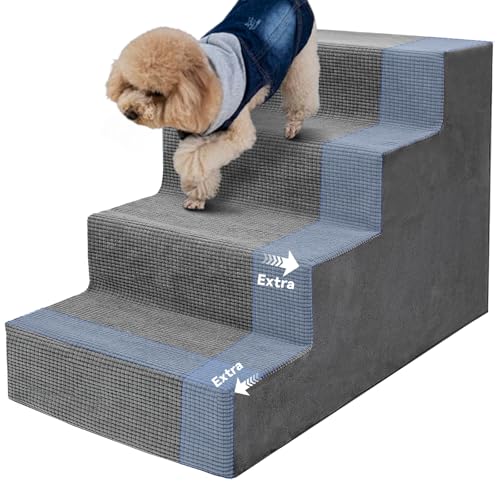
Niubya Niubya 18-inch Non-Slip Pet Steps
$19.99 on Amazon
Lightweight carpeted steps sized for cats and small pets, with a non-slip base

EHEYCIGA EHEYCIGA 4-Step Stairs for High Bed
$34.07 on Amazon
Soft 18-inch foam stairs with a washable cover, gentle on sore joints

Aechonow Aechonow 3-in-1 Pet Stairs for Cats
$32.29 on Amazon
Compact carpeted steps designed for cats and small pets in tight spaces

Pawque Pawque Stairs with Cat Scratching Post
$35.99 on Amazon
Sturdy framed steps for high beds that double as a scratching surface

MEJYJEM MEJYJEM 5-Step Stairs for Tall Beds
$50.99 on Amazon
Taller 28.7-inch non-slip steps for high beds, with sturdy support
How We Chose
Senior cats need different things from stairs than a young, athletic cat does. We prioritized the features that actually matter to an arthritic feline:
- Gentle rise per step: Shorter, deeper steps mean smaller hops and less joint strain on the way up and, just as importantly, on the way down.
- Traction: Carpet or a textured surface a cat can grip with claws, plus a non-slip base so the whole unit does not slide on hardwood.
- Stability: A frail cat needs to trust that the steps will not wobble or tip, so we favored stable bases and sturdy frames sized to the cat's weight.
- Right height: Stairs that actually reach the mattress top, since a unit that stops short still forces a jump.
- Easy cleaning: Removable, washable covers, because senior cats sometimes have accidents or shed heavily.
Stairs vs. the Jump: Why It Matters
A jump up to a 25-inch bed is roughly five times a cat's standing height. For a young cat that is effortless. For an arthritic 14-year-old, the takeoff stresses the hips and knees and the landing slams those same joints on the way down. Many senior cats can still make the leap but pay for it with stiffness afterward, and some misjudge the distance and fall. Stairs remove both the impact and the risk, which is why so many owners notice their cat returning to the bed once steps appear.
Senior Cat Wellness & Care Planner
Track your aging cat's health, meds, vet visits, mobility, nutrition, and quality of life — all in one printable planner.
Comparing the Top Picks
| Model | Height | Material | Best For |
|---|---|---|---|
| Niubya 18-inch | ~18 in | Carpeted, non-slip base | Budget, lighter cats |
| EHEYCIGA 4-Step | ~18 in | Soft foam, washable cover | Joint-friendly all-rounder |
| Aechonow 3-in-1 | Compact | Carpeted | Small spaces |
| Pawque + Post | High bed | Sturdy frame | Heavier cats, scratchers |
| MEJYJEM 5-Step | ~28.7 in | Non-slip, sturdy | Tall beds |
Getting Your Cat to Use the Stairs
The stairs only help if your cat uses them, and cats are suspicious of new objects. Set the steps in place a few days before expecting anything, so they stop being strange. Then lure your cat up gently with treats or a wand toy, one step at a time, and lay a blanket that already smells like your cat on the top step. Reward every attempt and never lift the cat onto the steps yourself. Patience over a week or two almost always wins.
A Note on Placement and Safety
Position the stairs flush against the bed at the exact spot your cat already uses, and set them on a rug or non-slip pad so the base cannot slide out mid-climb. Keep the floor at the bottom clear. If your cat loves several elevated spots, plan for more than one set, since a single staircase by the bed will not help with the windowsill or the sofa.
This guide is informational. If your cat has suddenly stopped jumping or seems painful, see your veterinarian, since stairs ease daily life but do not treat the underlying arthritis.
Related Guides
- Best Cat Ramps - When a continuous gentle slope suits your cat better than steps.
- Old Cat Can't Jump Anymore - The causes behind lost jumping ability and how to respond.
- Arthritis in Senior Cats - Signs, treatment, and relief for the most common cause.
Frequently Asked Questions
Do senior cats actually use pet stairs?
Most do once the steps are introduced patiently. Cats are creatures of habit, so place the stairs exactly where your cat already tries to jump, keep the climb gentle, and reward early attempts with treats or a favorite blanket on the top step. Carpeted surfaces feel secure under claws. Within a week or two many arthritic cats prefer the steps to a painful leap.
What height of cat stairs do I need for my bed?
Measure from the floor to the top of your mattress, then choose stairs that reach at least that height, ideally within an inch or two. A standard bed sits around 24 to 25 inches high, so a 4-step unit usually works. Taller beds may need a 5-step model. Stairs that stop well short of the mattress still force a jump and defeat the purpose.
Are stairs or a ramp better for an arthritic cat?
It depends on the cat. Stairs take less floor space and many cats find discrete steps intuitive, but each step is still a small hop that can stress sore joints. A ramp asks for a continuous gentle climb with no impact, which is easier on severe arthritis but takes more room. If your cat strongly favors one, follow their lead.
How do I get my cat to use new stairs?
Go slowly. Set the stairs in place for a few days so they stop being novel, then lure your cat up with treats or a wand toy one step at a time. Place a familiar-smelling blanket on top. Never pick the cat up and plop them on the steps, which creates a bad association. Praise every attempt and let the cat set the pace.
Are foam or wooden cat stairs better?
Foam stairs with a washable cover are lightweight, soft if a cat slips, and gentle on joints, which suits many senior cats. Wooden or sturdy framed stairs handle heavier or larger cats and feel more stable, but the steps are harder. For a frail, lightweight senior, soft carpeted foam is often the kinder choice; for a big-boned cat, a solid frame lasts longer.
Where should I place cat stairs?
Put them flush against the bed at the exact spot your cat already approaches it, on a non-slip surface so the base does not slide. Keep the landing area clear. If your cat uses several high spots, you may need more than one set: one by the bed, one by a window perch, and one by the sofa are common.
Need more help with your aging cat?
Browse our guides by topic to find practical solutions.
Wellness Planner — $39